


Team & Parent Guides
What to Expect on a Youth Baseball Trip to the Dominican Republic: A Parent & Coach’s Guide
Moving beyond domestic tournaments to experience international baseball in its purest environment.
If you’ve spent any time on the travel baseball circuit in the United States, you know the drill: $1,000 hotel bills for weekend tournaments, $80 gate fees, packed suburban complexes, and endless interstate driving.
While domestic showcase tournaments serve a purpose, more coaches and parents are asking a fundamental question: Is there a more meaningful, transformative way for our players to experience the game?
Taking a youth or high school baseball team to the Dominican Republic (DR) is unlike anything you’ve done on American soil. It is a baseball immersion into the beating heart of global baseball talent.
“A Dominican Republic baseball trip is more than a tournament—it’s a life experience that changes how young athletes view the world and their place within the game.”
— Vias Baseball Development TeamHowever, taking an American team across international borders also raises natural questions and anxieties for team organizers and parents:
- Is it safe for our players and families?
- How do the ground logistics and transportation work?
- Will the competition level match our players' age group?
- How does this differ from standard tour operators or resort vacations?
This comprehensive guide answers those questions directly. Whether you’re a coach considering bringing a roster or a parent evaluating a trip for your athlete, here is everything you need to know about planning, executing, and experiencing a youth baseball trip to the Dominican Republic.
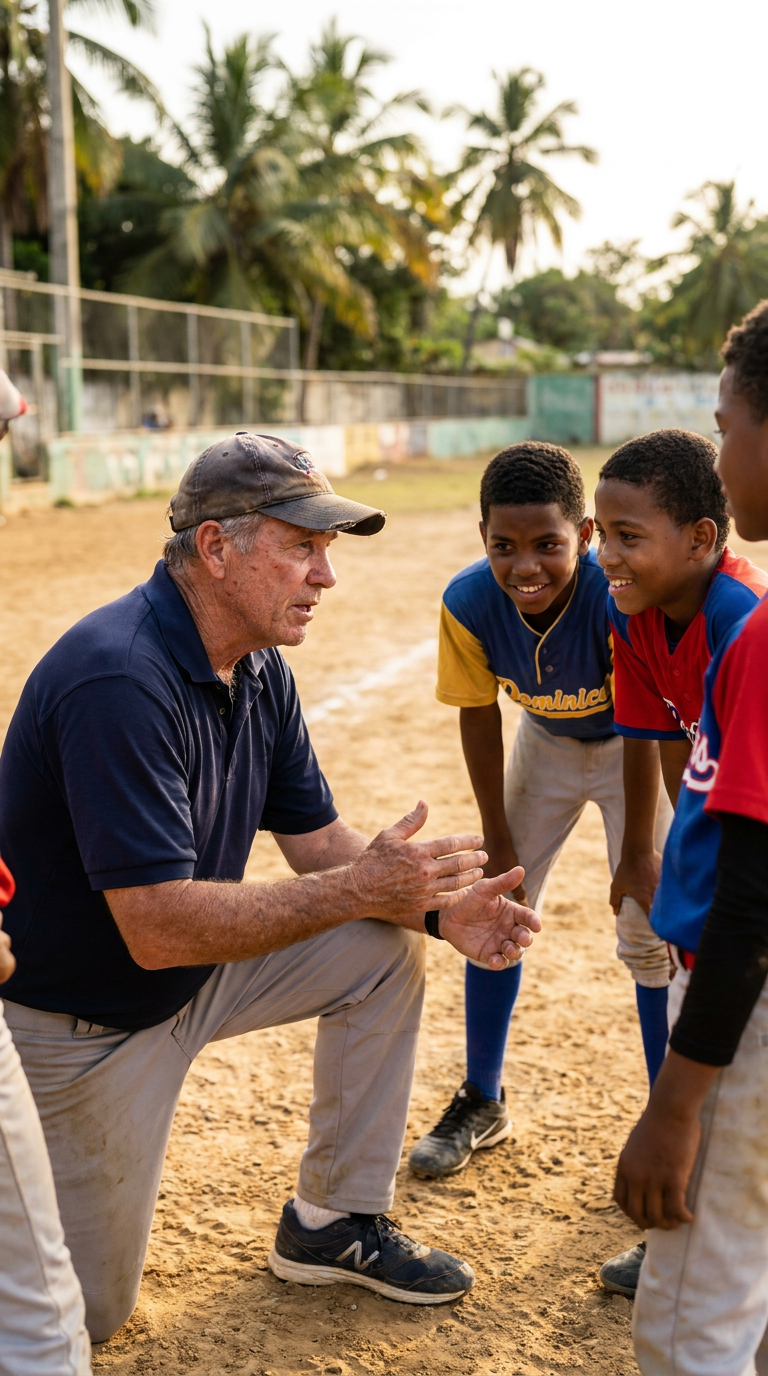
Connecting through the game: Shared passion breaks down language barriers instantly.
1. The Reality of Dominican Baseball: Why It Changes Players
In the United States, baseball is often a seasonal sport structured by parents, private instructors, expensive travel clubs, and specialized facility memberships. In the Dominican Republic, baseball—pelota—is a way of life.
The DR produces more Major League Baseball players than any country outside the United States. But what American players notice immediately isn't just the talent—it’s the speed, instincts, and pure passion for the game.
The Game Style Differences You Will Notice
- Aggressive, Instinctual Play: Dominican players learn the game on sandlots (canchas) using makeshift balls made of rolled-up tape and plastic bats made from broomsticks (vitilla). They play with incredible freedom, fast arm actions, and aggressive baserunning.
- Raw Atmosphere: Forget artificial turf, pristine warning tracks, and walk-up songs over expensive PA systems. You will play on dirt fields bordered by palms, accompanied by cheering local crowds playing music from nearby colmados.
- No 'Dead-Air' Energy: Dominican teams talk, cheer, sing, and bring high-octane energy to every inning.
When American players step onto a field in San Pedro de Macorís, Juan Dolio, or Santo Domingo, the game strips away the luxury equipment and noise. American players are forced to adapt to a faster rhythm, read ball trajectories quicker, and compete with pure passion. Coaches routinely report that players return home with a sharper competitive edge and a renewed love for the sport.
2. Safety, Accommodations & Logistics: Addressing Parent Concerns
The single biggest barrier for families considering an international sports trip is safety and ground organization. "How will our kids be cared for in an unfamiliar country?"
A successful trip relies entirely on the quality of ground infrastructure. Here is how a professionally coordinated trip addresses these logistical realities:
Resort & Lodging Infrastructure
For most visiting teams—especially those traveling with parents and siblings—staying in a vetted, secure, all-inclusive resort setting (such as those in the Juan Dolio or Boca Chica beach regions) provides the ideal balance:
- Gated Security: 24/7 resort security perimeters and controlled entrance access.
- All-Inclusive Dining: Scheduled, buffet-style group meals that remove the daily stress of finding places to feed 20 to 40 hungry players and family members.
- Family Comfort: Pool and beach access during downtime, allowing non-playing family members to have an actual vacation while the team is training or competing.

All-Inclusive Resort Base: Secure accommodations and group dining in Juan Dolio.
Transportation & On-Ground Support
Navigating Dominican roads requires experienced, local professional drivers.
- Dedicated Ground Transport: Teams travel together on private, air-conditioned charter buses for every airport transfer, game, showcase, and excursion.
- Bilingual On-Site Directors: Having staff on the bus, at the field, and at the hotel ensures language barriers never delay a meal, confuse a schedule, or cause an issue during personal needs.
3. Tour Operators vs. Relational Ground Work
When researching baseball travel to the Dominican Republic, you’ll notice a wide spectrum of operators. Understanding the difference between a commercial tour operator and a relationally rooted organization is critical.
| Feature | Standard Tour Operators | Vias Baseball (Relational Model) |
|---|---|---|
| Primary Focus | Commercial travel margins & high volume. | Long-term local relationships, development & service. |
| Local Connections | Subcontracted local brokers or hired space. | 25+ years of direct local partnerships & youth academies. |
| Matchmaking | Generic scheduling with available groups. | Hand-selected opponent matchups aligned to your team's caliber. |
| Community Impact | Transactional visits; depart after the last out. | Direct community service & equipment donation integrated. |
The Vias Baseball Difference: Baseball With a Purpose
Vias Baseball operates as a team-travel initiative of The Straley Project, a U.S. 501(c)(3) nonprofit organization that has built relationships in the Dominican Republic for more than 25 years.
Unlike commercial sports travel agencies that drop in for a quick profit, Vias operates year-round local youth development and educational programs in the DR. When your team travels with Vias, you step into an authentic, established network of local families who welcome your players as extended family.
4. What a Typical 7-Day / 6-Night Itinerary Looks Like
Every team trip can be tailored around your group's age (10U through High School / College), budget, and goals. However, a structured 7-day program typically balances competitive games, MLB academy visits, community service, and Caribbean culture.
Day 1
Arrival at Santo Domingo (SDQ), Private Transfer, Orientation & Team Dinner
Day 2
Morning Practice/Rondalla & Game 1 vs. Local Dominican Club
Day 3
MLB Academy Tour (e.g., Boca Chica complex) & Game 2
Day 4
Community Service / Equipment Donation & Game 3
Day 5
Cultural Excursion (Historic Santo Domingo / Coast) & Game 4
Day 6
Final Championship / Showcase Matchup & Closing Night Celebration
Day 7
Resort Breakfast, Group Packing & Airport Departure Transfer

Equipment Distribution Day: Hand-delivering gloves, bats, and gear to local Dominican youth players.
5. Preparation Checklist for Parents and Coaches
If you are planning to join a trip or bring your team, preparation makes all the difference. Here is a practical checklist to keep on your radar:
- Passports & Expiration Rules: All travelers (players, parents, coaches) must hold a passport valid for at least 6 months beyond the trip departure date. Check your expiration dates early!
- E-Ticket Customs Form: The Dominican Republic requires all incoming and outgoing passengers to complete a free digital E-Ticket form prior to airport customs.
- Bring Wood Bats & Extra Game Balls: Dominican games are frequently played with wood bats. Dominican leagues always appreciate left-behind game balls and training equipment.
- Hydration & Sun Protection: The Caribbean sun is intense year-round. Pack high-SPF sunscreen and electrolyte packets. Filtered/bottled water is strictly provided at all team resort facilities and fields.